ACTIVE HEADER


Understanding Children’s Vision Tests: Color, Depth, & More
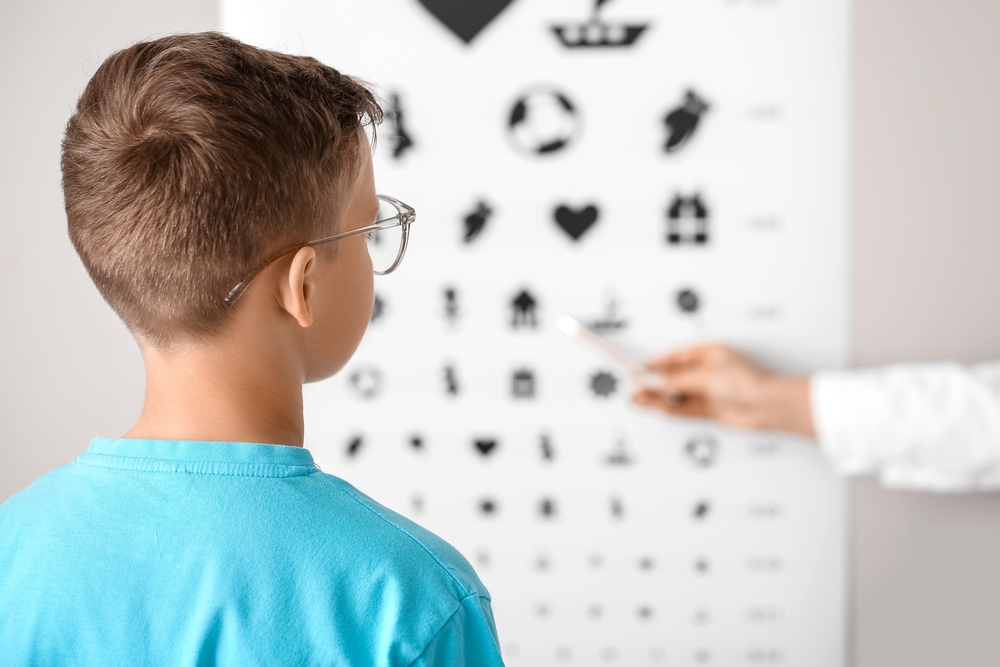
Most parents are familiar with the classic eye chart, but for kids, that is only the beginning. A children’s eye exam looks at more than just how clearly they can see letters or shapes. It is about making sure their eyes work together, focus properly, and help them explore, learn, and play with ease.
These tests are designed to be interactive and fun. To your child, they will often feel more like games than medical exams. Here’s what we check and why each part matters for your child’s vision and development.
The Basics: Checking for Clear Sight
We start by checking how clearly your child can see, what is known as visual acuity. Older kids often use the familiar letter chart, while younger children might look at simple shapes or pictures like a house, a car, or an apple.
Each eye is tested separately and then together. This helps us spot if one eye is weaker than the other. Kids often do not realize when their vision is blurry; they assume everyone sees the world the same way. These tests help us understand exactly how they see and where support might be needed.
Color Vision: Seeing a World of Color
Color helps children make sense of the world, from choosing crayons to sorting toys or reading charts in school. To see how your child recognizes different colors, we use a simple, kid-friendly test that feels more like a puzzle than a medical exam.
Your child looks at pages filled with tiny colored dots. Hidden in those dots are shapes or numbers that blend in unless you can see certain colors clearly. The test only takes a minute, and it’s completely painless. If your child has trouble spotting the hidden shape, it might point to a color vision difference. Knowing this early helps parents and teachers make small adjustments that keep learning and play easy and frustration-free.
Depth Perception: Seeing the World in 3D
Depth perception helps children understand how far away things are, an important skill for sports, climbing stairs, or even pouring a drink. To check this, we may give your child a pair of 3D glasses and ask them to point to an image that seems to “pop out” of the page.
If they can see which object looks closer, it tells us their eyes are working together properly to create a three-dimensional view. Strong depth perception means their eyes are aligned and functioning as a team.
Eye Teaming and Focusing
Think about your child’s eyes like two players on the same sports team. To work well, they need to move together and focus on the same thing.
When they do not, it is hard work. Your child might get headaches after school. Their eyes might feel tired or sore. They might even find it hard to pay attention during homework or screen time.
The good news is that checking this is fun for kids. We might have them follow a fun little light with their eyes, like watching a firefly. Or we will play a game where they quickly look from a toy in their hand to a picture across the room.
Why a Comprehensive Test Matters
A school vision screening is a good start, but it only checks part of the picture. A full exam looks at how your child’s eyes work together, how they process visual information, and whether their vision supports learning and play.
Catching a problem early can make a big difference, improving reading, focus, and confidence both in and out of the classroom.
For more on children’s vision tests, visit West Florida Optometry. Our office is in Pensacola, Florida. Call (850) 318-5600 to book an appointment today.


ACTIVE FOOTER

Powered by: